The Problem
The client, an entrepreneur in the food science space, had a strong idea but was dealing with a complex execution problem. The goal was to build a system that could pull together nearly 100 million data points from different sources, including insights rooted in ancient sciences, and use that to generate plant-based product formulations.
The challenge wasn’t just the scale of data, but making sense of it in a way that could actually produce useful outputs. On top of that, there was a tight 8-week timeline to get a working prototype ready for investor presentations, along with limited budget and no room to bring in a large development team.
In short, they needed to turn a heavy, data-driven concept into something tangible, fast and without overspending.
The Solution
We focused on moving fast without overcomplicating things. Instead of traditional development, we used a mix of no-code and low-code tools to get a working system up quickly.
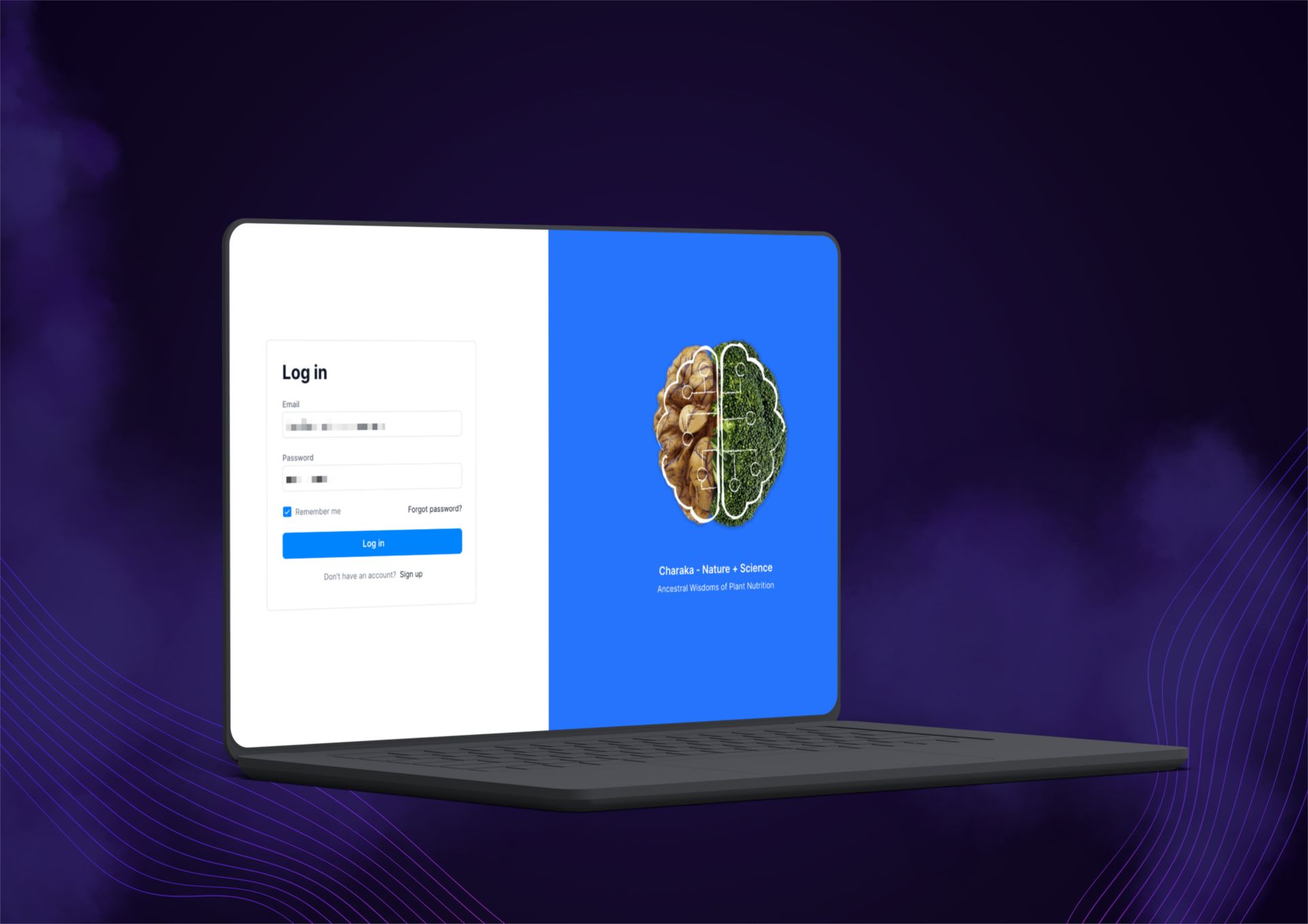
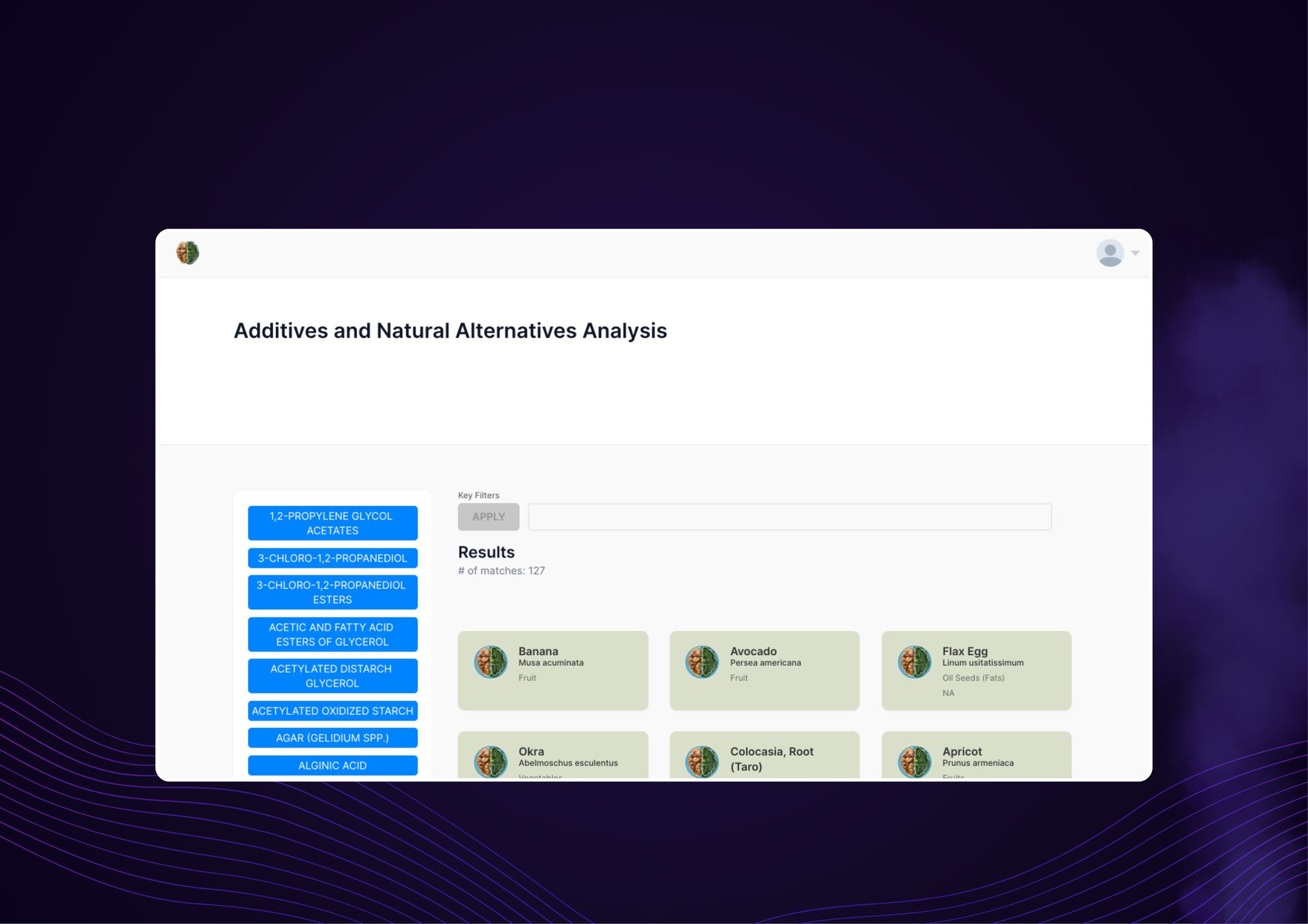
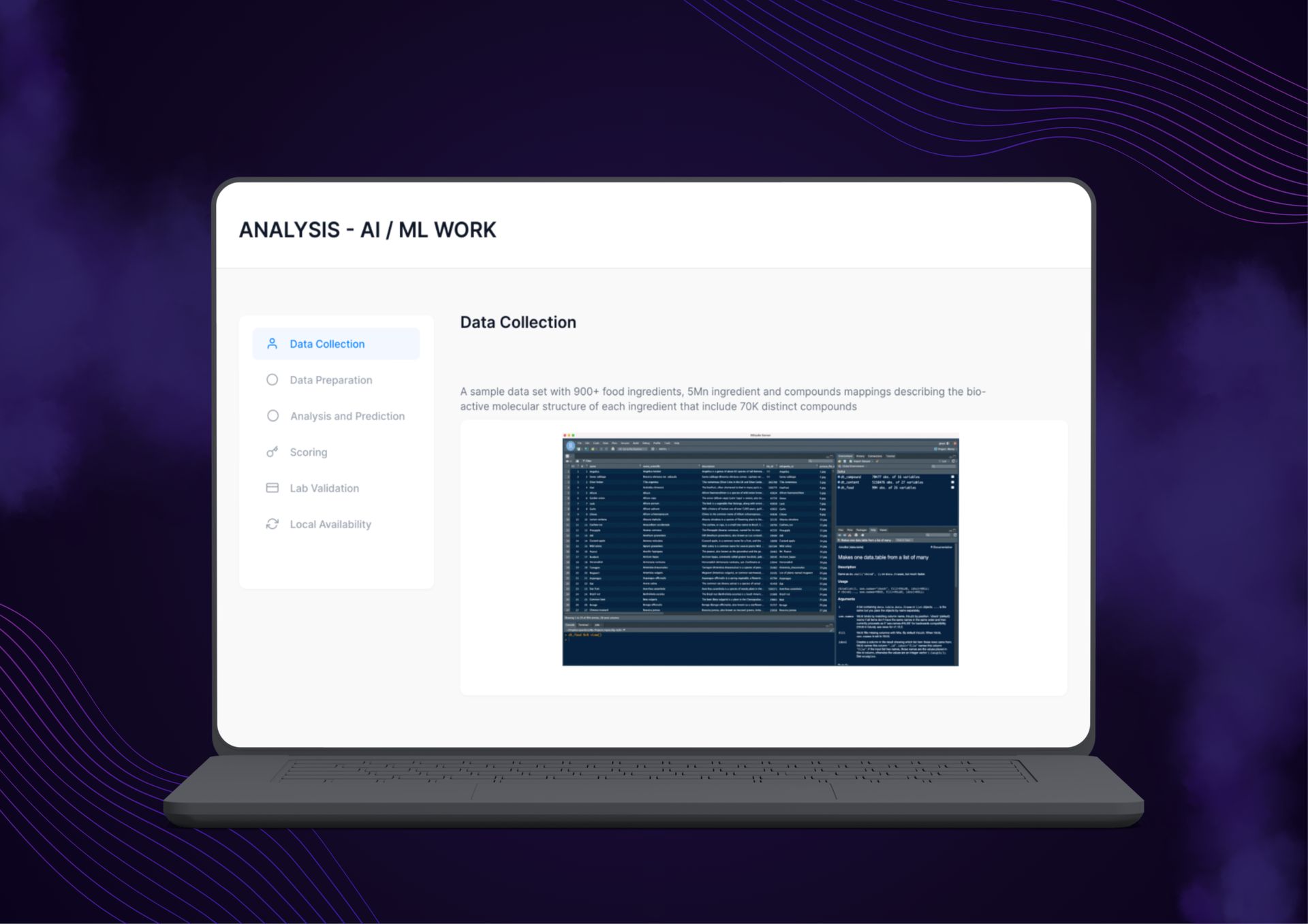
Bubble was used to build a clean, investor-ready front-end, while PostgreSQL handled the large volumes of data coming in from multiple sources, including the research team. To make data entry easier, we set up a simple internal interface using Appsmith so the team could continuously feed and manage data without delays.
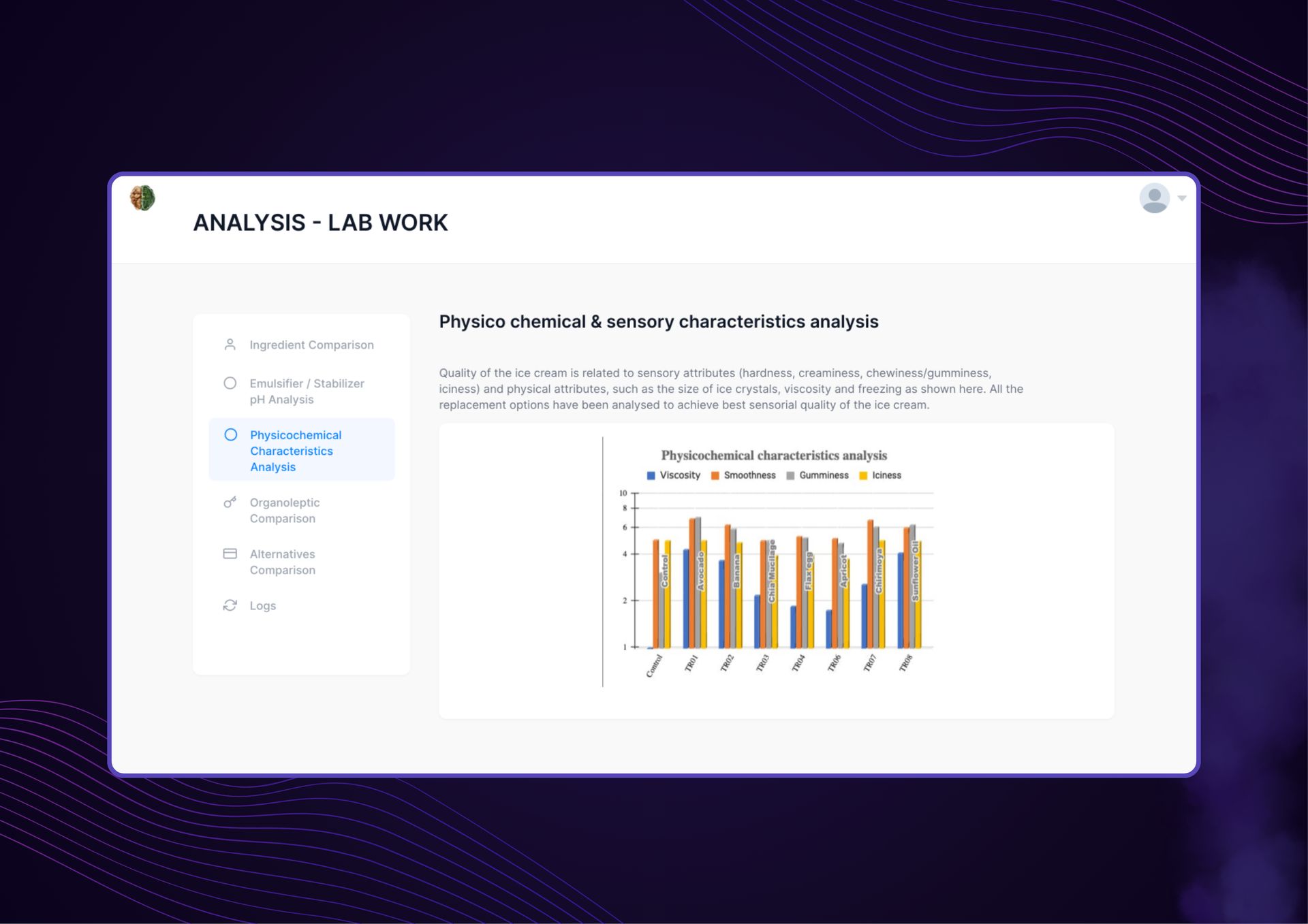
On top of this, Python-based models were integrated to process the data and generate meaningful outputs in the background. The entire setup worked together smoothly, giving the client a solid, functional product within a short timeframe.
The Impact
The prototype was ready within the 8-week window, and more importantly, it clearly demonstrated the potential of the idea. This played a key role in helping the client secure $500,000 in seed funding soon after.
As the product evolved, the same foundation was expanded to handle deeper data capabilities and more advanced modeling, which supported further growth and traction. Within about 18 months, the company went on to raise a total of $7 million.
Beyond funding, the project also started getting attention from industry groups for its approach to combining research, data, and technology in a practical way. What started as a constrained prototype turned into a strong base for a scalable, AI-driven product.